
The Science Behind How Therapy Works
You’ve heard therapy can help, but you’re skeptical. How exactly does talking to someone change anything? If your problems are real—money stress, relationship conflicts, health concerns—how would discussing them with a therapist make any difference? It sounds almost magical, and you don’t believe in magic.
At Televero Health, we understand this skepticism. Many of our clients initially questioned whether therapy could address their very concrete challenges. They wanted to understand the mechanics—the how and why behind therapeutic change—before investing their time and resources.
The good news is that therapy isn’t magic. It’s a process grounded in science, with measurable effects on the brain and body. Understanding these mechanisms can help demystify the process and set realistic expectations for what therapy can accomplish.
Your Brain Is Constantly Rewiring Itself
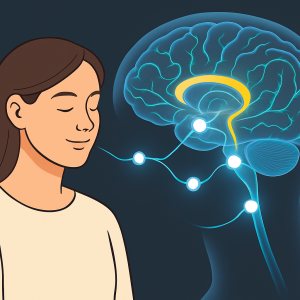 To understand how therapy works, it helps to start with a fundamental scientific principle: neuroplasticity. This is your brain’s lifelong ability to reorganize itself by forming new neural connections.
Every time you have a thought, feel an emotion, or engage in a behavior, specific neural pathways in your brain activate. When patterns repeat, these pathways strengthen—like trails becoming wider and more established with repeated use. Over time, these well-worn neural pathways become your default ways of thinking, feeling, and behaving.
This neuroplasticity is a double-edged sword. On one hand, it means that problematic patterns—like anxious thinking, depressive rumination, or unhelpful reactions—can become deeply ingrained. On the other hand, it means these patterns can change. Your brain maintains its ability to form new connections throughout your life.
Therapy leverages this neuroplasticity deliberately. It helps you identify ingrained patterns that aren’t serving you, create new neural pathways through different experiences and perspectives, and strengthen these new pathways through practice and repetition.
Research using brain imaging technologies has actually visualized these changes. Studies show that successful therapy is associated with measurable changes in brain activity, particularly in regions involved in emotional regulation, self-perception, and cognitive processing.
Different Therapy Approaches Target Different Brain Systems
Different therapeutic approaches work through somewhat different mechanisms, though there’s considerable overlap:
Cognitive-Behavioral Therapy (CBT) primarily targets the prefrontal cortex—the brain’s executive center—strengthening its ability to recognize and modify automatic thoughts and behaviors. Research shows CBT can actually increase prefrontal activity and improve its regulatory connection to emotional centers like the amygdala.
Psychodynamic Therapy often engages memory systems, helping you recognize patterns from past experiences that influence current reactions. This approach can involve the hippocampus and autobiographical memory networks, helping to integrate fragmented or implicit memories into a more coherent narrative.
Mindfulness-Based Approaches work partly by strengthening the insula and anterior cingulate cortex, brain regions involved in present-moment awareness and attention control. These approaches help you observe your thoughts and feelings without automatically reacting to them.
EMDR (Eye Movement Desensitization and Reprocessing) appears to help the brain process traumatic memories differently, possibly by engaging both hemispheres in a way that mimics REM sleep’s memory consolidation processes.
While these approaches use different techniques, they all create conditions for the brain to establish healthier neural patterns. And interestingly, research suggests that regardless of the specific approach, certain common factors contribute significantly to therapeutic effectiveness.
The Science of Therapeutic Relationships
One of the most robust findings in therapy research is the importance of the therapeutic relationship. The quality of the connection between client and therapist consistently predicts outcomes across different therapy types and issues.
This isn’t just about feeling comfortable. There are neurobiological reasons why this relationship matters so much:
Social Baseline Theory: Human brains are wired to regulate themselves in connection with trusted others. In the presence of a safe, attuned person, your nervous system can regulate more effectively than when you’re alone. This is why distress often decreases simply from sharing it with an attuned therapist.
Mirror Neuron System: Your brain contains neurons that activate both when you perform an action and when you observe someone else performing it. This system helps you internalize the therapist’s calmer perspective and regulatory capacity over time.
Attachment Circuitry: The therapeutic relationship can activate and gradually modify neural networks formed in early attachment relationships. This explains why the experience of being consistently seen, heard, and supported can be transformative, even for people with difficult relationship histories.
At Televero Health, we recognize that while techniques and approaches matter, the relationship itself is a primary agent of change. The therapist’s presence creates a unique neurobiological environment where new patterns can develop more readily than they might in isolation.
Therapy Changes How Your Body Responds to Stress
Therapy doesn’t just change thought patterns—it can actually alter how your body responds to stress on a physiological level. Research has documented multiple biological changes associated with effective therapy:
Cortisol Regulation: Studies show that successful therapy can normalize cortisol patterns (the primary stress hormone), reducing the physical wear-and-tear of chronic stress on the body.
Inflammation Markers: Some research indicates that therapy can reduce pro-inflammatory cytokines associated with depression, anxiety, and various physical health problems.
Heart Rate Variability: Therapy often improves heart rate variability (the variation in time between heartbeats), which is an important indicator of autonomic nervous system flexibility and stress resilience.
Gene Expression: Emerging research suggests that therapy may even affect gene expression related to stress response, though this field is still developing.
These physiological changes help explain why therapy often improves not just psychological symptoms but also physical health markers. The mind-body connection isn’t metaphorical—it’s literal, with measurable pathways connecting emotional processing to physical functioning.
Building New Emotional Habits Through Experience
A key insight from neuroscience is that emotional learning happens primarily through experience, not intellectual understanding alone. You might logically know that a certain fear is irrational, but that knowledge doesn’t automatically change your emotional reaction.
Therapy creates new emotional experiences that directly reshape these response patterns:
- Experiencing acceptance rather than judgment when sharing vulnerable thoughts
- Encountering a feared situation and finding you can cope with the discomfort
- Trying a new behavior and discovering positive results
- Feeling emotions fully in a safe context and finding they naturally transform
Each of these experiences creates new data for your brain and nervous system—evidence that contradicts problematic expectations or beliefs. Over time, these experiences accumulate, building new emotional habits and expectations.
This experiential learning happens both within the therapy session and through practices or experiments you might try between sessions. The combination of insight (understanding patterns) and experience (trying new approaches) creates more complete and lasting change than either would alone.
The Window of Tolerance: Where Change Happens
Neuroscience research has identified something called the “window of tolerance”—the zone where your nervous system is neither too activated (fight/flight) nor too shut down (freeze/collapse). Within this window, you can think clearly, feel emotions without being overwhelmed, and integrate new information effectively.
Skilled therapy helps you expand this window over time, allowing you to remain present and engaged with a wider range of experiences and emotions. This happens through:
- Creating safety that keeps your nervous system from going into protective responses
- Gradually approaching difficult material at a pace that doesn’t overwhelm your system
- Teaching specific regulation skills that help you return to your window when you leave it
- Strengthening your awareness of your nervous system states so you can respond intentionally
As your window of tolerance expands, you become capable of navigating situations that previously would have triggered automatic protective responses. This creates more choice in how you respond to challenges, rather than being driven by habitual reactions.
From External Support to Internal Capacity
Perhaps the most important scientific insight about therapy is how external support gradually becomes internal capacity. Through a process called internalization, you develop the ability to do for yourself what the therapeutic relationship initially did for you:
The therapist’s compassionate perspective becomes your own inner voice of self-compassion
The therapist’s curious questions become your own habit of self-reflection
The therapist’s steady presence becomes your own ability to remain present with difficult feelings
The therapist’s acceptance of all parts of your experience becomes your own self-acceptance
This doesn’t happen through simple imitation but through complex neurobiological processes that gradually reshape your internal working models and self-regulatory capacities. It’s why the benefits of successful therapy continue long after the therapy itself ends.
At Televero Health, we see our role not as providing permanent external support, but as helping you develop internal resources that eventually make external support less necessary. Effective therapy should make itself increasingly obsolete as you develop your own capabilities.
While therapy may sometimes look like “just talking,” its effects are far more profound. Through systematic engagement with your brain’s natural plasticity, therapy creates measurable changes in neural pathways, stress physiology, emotional responses, and self-regulatory capacities.
It’s not magic. It’s science—applied with skill, care, and precision to the unique circumstances of your life.
Ready to experience the science of therapeutic change? Connect with us today.