
What It Means to Be Emotionally Regulated
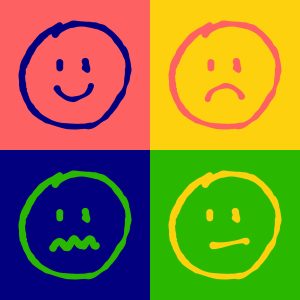 Think of your emotions like the weather. Some days are calm and sunny, while others are stormy and turbulent. You can’t control the weather itself, but you can learn to navigate it. You can grab an umbrella in the rain or seek shelter in a thunderstorm. The ability to navigate your internal emotional weather, to manage your feelings without being completely swept away by them, is called emotional regulation. It is one of the most fundamental skills for mental well-being.
At Televero Health, we see emotional dysregulation at the heart of many mental health struggles. When you are emotionally dysregulated, your feelings feel overwhelming and out of your control. A core goal of therapy is to help you build your emotional regulation skills, so you can feel more like the calm, steady captain of your own ship, even in stormy seas.
What Is Emotional Regulation?
Emotional regulation is the ability to manage and influence which emotions you have, when you have them, and how you experience and express them. It is a complex process that involves several key skills:
- Identifying and Understanding Your Emotions: You can’t regulate an emotion if you don’t know what it is. This is the ability to accurately label your feelings (e.g., “I am feeling disappointed,” not just “I feel bad”).
- Accepting Your Emotions: This is the willingness to allow yourself to feel your feelings without judging them as “good” or “bad.” All emotions are valid sources of information.
- Managing the Intensity: This is the ability to use coping strategies to either soothe yourself when an emotion is too intense, or to amplify a positive emotion.
- Choosing Your Behavior: This is the crucial ability to control your actions, even when you are feeling a strong emotion. You can feel angry without yelling. You can feel anxious without avoiding.
It’s important to understand that emotional regulation is not about suppressing your feelings or never feeling bad. It’s about learning to respond to your emotions in a conscious and helpful way, rather than reacting to them automatically and unhelpfully.
Why Do I Struggle with Emotional Regulation?
The ability to regulate our emotions is a skill that we are supposed to learn in childhood. We learn it through a process called “co-regulation,” where our caregivers help us to manage our big feelings. When a baby is crying, a parent picks them up and soothes them. This external soothing helps to calm the baby’s nervous system and, over time, the child internalizes this ability.
Many people who struggle with emotional regulation as adults did not have consistent co-regulation as children. They may have grown up in an environment that was chaotic, invalidating, or where they were taught that certain emotions were not okay. As a result, they never had the chance to fully develop their own internal regulation skills.
How Therapy Helps You Build Regulation Skills
The good news is that it is never too late to learn. Therapy is a place where you can build these skills as an adult. Therapies like Dialectical Behavior Therapy (DBT) are specifically designed to teach emotional regulation.
In therapy, you will learn to:
- Practice Mindfulness: Mindfulness is the foundation of emotional regulation. It teaches you to observe your emotions with non-judgmental awareness, which creates the space you need to choose your response.
- Build a Coping Skills Toolbox: You will learn a range of distress tolerance and self-soothing skills to help you manage intense emotions in the moment. This could include deep breathing, grounding techniques, or using a cold pack on your face to calm your nervous system.
- Understand Your Emotional Triggers: You will learn to identify the situations and thoughts that trigger your intense emotional reactions, which gives you the power to prepare for them.
- Decrease Your Vulnerability: You will learn how basic self-care—like getting enough sleep, eating regularly, and exercising—can make you less emotionally vulnerable and more resilient to stress.
Learning to be emotionally regulated is a journey of empowerment. It is the process of learning that your feelings are not your enemy. They are messengers. By learning to listen to their wisdom without letting them take over, you can navigate your life with a greater sense of balance, stability, and inner peace.
Key Takeaways
- Emotional regulation is the ability to manage your emotions without being overwhelmed by them; it is a fundamental skill for mental health.
- It involves identifying, accepting, and influencing your emotional experience and choosing your behaviors consciously.
- Many people struggle with emotional regulation because they did not have the opportunity to learn this skill in childhood.
- Therapy, especially approaches like DBT, can teach you practical skills in mindfulness, distress tolerance, and self-care to build your capacity for emotional regulation as an adult.
Ready to take the first step? We can help. Get started with Televero Health today.